
The World Wagyu Conference in South Africa
Under the theme “One Breed, One Vision,” the 2026 World Wagyu Conference in South Africa brought the international Wagyu community together to share knowledge, strengthen collaboration, and explore a common vision for the future of Wagyu.

My journey with Wagyu has taken me from Argentina to Japan and into a community that spans continents. In October, that journey brought me to South Africa, where I had the privilege of being the opening speaker on Day 2 of the 2026 World Wagyu Conference.
Held on October 13–14 at Cavalli Estate near Stellenbosch and hosted by the Wagyu Society of South Africa, the conference brought the international Wagyu community together under the theme “One Breed, One Vision.” Event details.
For me, the occasion represented an opportunity to contribute a meat sommelier’s perspective to a discussion that connects everyone involved in Wagyu—from the breeder to the person enjoying it at the table.
One Breed, One Vision
The World Wagyu Council connects national Wagyu associations and societies through initiatives that support the Wagyu brand and its genetic legacy. The conference’s stated priorities included shared standards, innovation in production and marketing, and stronger international cooperation. About World Wagyu 2026.
“One Breed, One Vision” provided a meaningful framework for those conversations. Wagyu is raised in different environments, prepared through different culinary traditions, and enjoyed by consumers with different preferences. Building a shared vision requires understanding those differences while protecting the qualities and heritage that give Wagyu its identity.

Opening Day 2: A Meat Sommelier’s Perspective
Being invited to open Day 2 was an honor and an opportunity to bring the consumer’s perspective into the conversation. In my presentation, “Wagyu Beyond Marbling: A Consumer’s Perspective,” I explored three themes that shape how people appreciate and value Wagyu.
The first was the Wagyu flavor “sweet spot.” Drawing on my sensory evaluations and published research, I examined the relationship between intramuscular fat and eating enjoyment, asking when additional marbling begins to offer less pleasure. Understanding consumer preferences requires looking closely at the balance between richness, flavor, and texture.

The second was the “Wagyu X-Factor”: the elements that turn an exceptional cut into a memorable experience. Through Japanese concepts of craftsmanship, careful selection, aesthetics, hospitality, and the uniqueness of each encounter, I explored how the experience surrounding Wagyu contributes to its perceived value.

Finally, I addressed provenance and transparency. As consumers become more informed, clearly communicating origin and production practices becomes essential to protecting Wagyu’s identity and maintaining trust. Helping people understand what makes their Wagyu distinctive creates opportunities throughout the value chain.

Looking Beyond the Familiar Cuts
Understanding the whole carcass is another important part of this work.
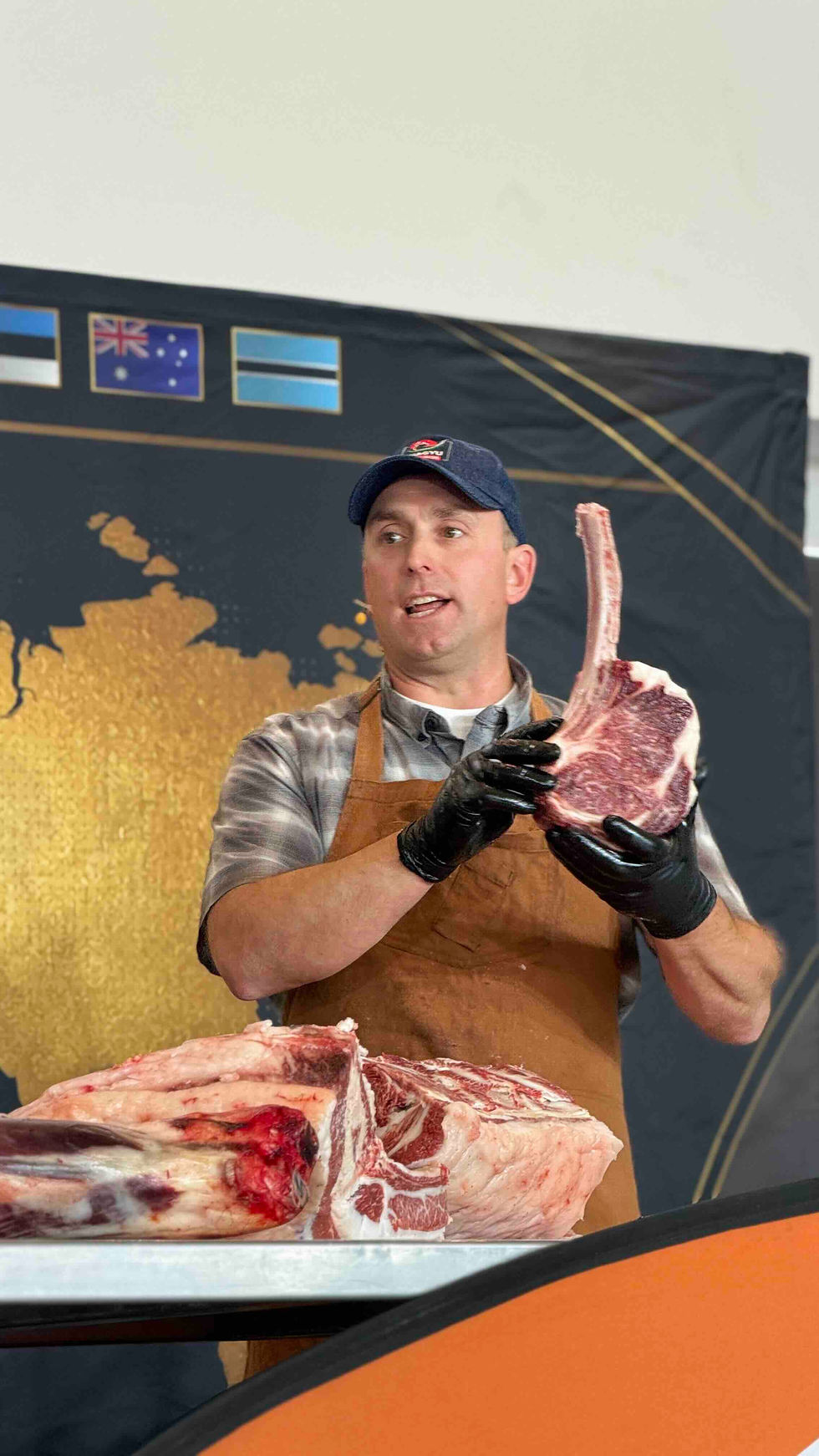
Wagyu offers a remarkable range of culinary possibilities. Different muscles bring different textures, fat distribution, and flavor characteristics, creating opportunities for chefs and butchers to introduce diners to cuts they might otherwise overlook.
The conference’s published program placed attention on these possibilities, with culinary experts exploring Wagyu cuts and approaches to their preparation and presentation.
A Shared Commitment
I am grateful to the organizers and honored for the invitation to open Day 2 and to contribute to this international exchange in South Africa.

“One Breed, One Vision” is a commitment that depends on people sharing what they know, listening to one another, and continuing to improve their craft.
For my part, I will continue building connections between production and the table, helping people understand Wagyu through its history, culture, craftsmanship, and sensory qualities—and sharing the stories of those who make it possible.


